
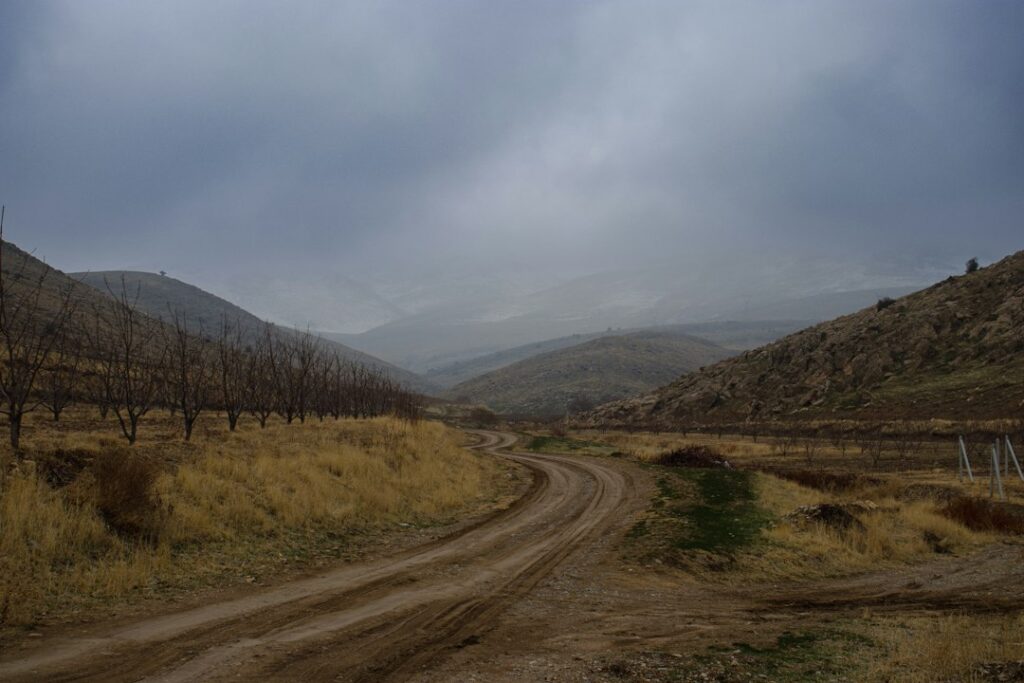
Featured photo: rural road by milad nouri dastjerd / Unsplash. Illustrative only; not a verified California road, recorded easement or approved fire-access route.
CALIFORNIA58 | LAND & PROPERTY ACCESS | OCTOBER 18, 2026. A rural California listing may show a beautiful dirt road leading to an inexpensive lot. Before buying, determine whether that road is legally available to the parcel—and whether the city, county and fire authority would accept it for a new home. A route visible on a satellite map is not proof of a recorded access right or an approved building entrance.
Three different questions
Physical access means a road or track exists on the ground. Legal access means the owner has an enforceable right to use a route, which may involve a public road, recorded easement or another legal basis. Development access means the proposed route satisfies applicable planning, grading, emergency vehicle and building requirements. A parcel may satisfy one of these tests but not the others.
How to investigate a rural driveway or private road
- Order a title review. Ask a title company or qualified real-estate attorney to identify recorded easements, rights-of-way, exclusions and restrictions. Read the actual instruments rather than relying on the listing description.
- Compare the route with maps. Use assessor maps and recorded documents to locate the access corridor. A licensed land surveyor may be needed to resolve its precise location.
- Confirm public versus private status. Ask the county public works department whether the road is maintained by a public agency. A road name on an online map does not prove public maintenance.
- Ask who pays for upkeep. Private-road agreements can allocate grading, drainage, gate, bridge and snow-removal costs among owners. Look for written maintenance obligations and potential disputes.
- Check emergency access early. Ask the local fire authority and building department about driveway width, grade, turnarounds, surface, bridge loading, gate access and fire apparatus access for the specific project.
Why an easement alone may not be enough
A recorded right to pass over a neighbor’s property may not automatically authorize widening, grading, utility trenching or construction traffic. The wording and scope of the easement matter. Conversely, a physically drivable road may have no established legal access. These are fact-specific legal questions that should be resolved before closing.
Fire safety and building permits
The California Office of the State Fire Marshal publishes fire-safety information, while local authorities apply the relevant adopted fire and building standards. Access requirements can differ depending on jurisdiction, topography, development type and existing conditions. A steep hillside or long driveway may require engineering work or a fire-authority review before permits can be issued. The official fire hazard maps provide another useful screening step, but map classification does not substitute for an access determination.
Questions to ask before you pay
Is the road public or private? Is access recorded for this specific parcel? Does the easement permit the intended use? Who maintains the road? Can emergency vehicles reach the building site? Will grading, culverts, bridge upgrades or a turnaround be required? Get answers from the title reviewer, local planning and public works staff, and fire authority—not just the seller.
For related research, read why an assessor parcel number does not prove buildability, our hillside geologic-hazards guide, and our 17-point vacant-land checklist.
Public-agency references: California Office of the State Fire Marshal; California Board of Equalization county-assessor directory. Legal access and emergency-access approval are parcel-specific; this article does not establish rights or grant permission to build.
USEFUL SERVICES
Useful services from our ecosystem
AFFILIATED RESOURCE
Travel smarter worldwide
OptionTripAI-powered trip planning for journeys in California and around the world.
Explore OptionTrip →AFFILIATED RESOURCE
Free tax & property tools
TaxesTimeFree preliminary tax and property tools, including the Property Tax Savings Report.
Explore TaxesTime →AFFILIATED RESOURCE
California document support
LegalDocSVCDocument preparation support for self-represented Californians. Not a law firm and not legal advice.
Explore LegalDocSVC →WORK WITH CALIFORNIA58
Have a story, project or partnership idea?
California58 welcomes news tips, interviews, video projects, community partnerships, advertising and other California-focused collaborations.
Work with California58 →
COMMUNITY
Comments
Join the California58 conversation. You must be signed in to comment.
Create a free California58 account or sign in with an available social provider.