
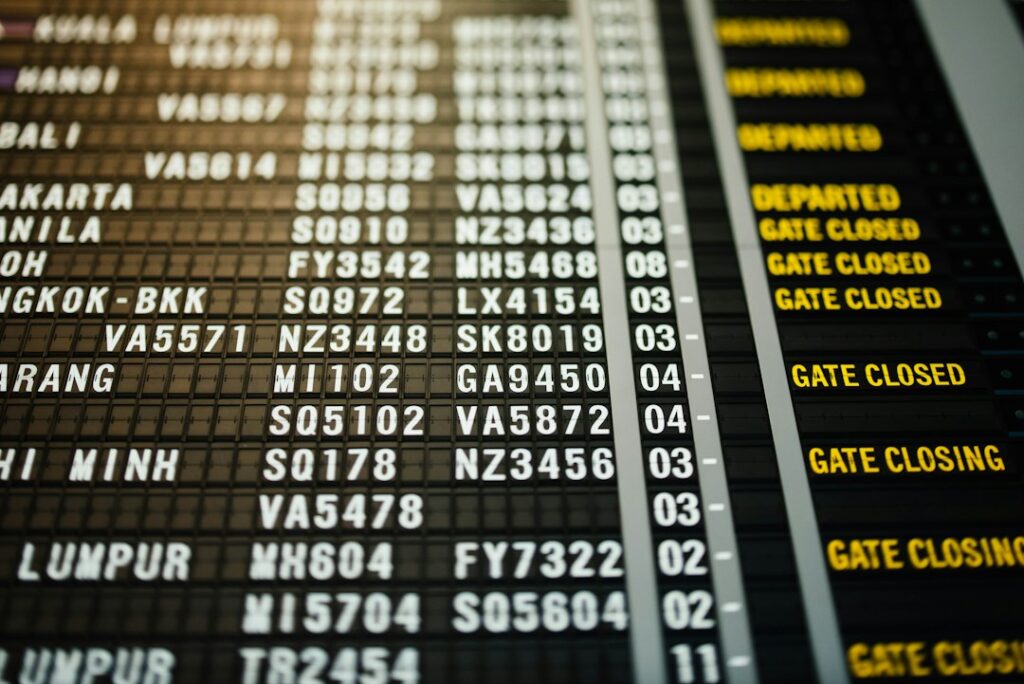
November 13, 2026 | California58 Newsroom | Developing story, updated 5 p.m. Pacific. The Federal Aviation Administration ordered a rare nationwide halt to departing aircraft on Friday after a telecommunications failure disrupted communications at U.S. air route traffic control centers. The safety measure affected departures throughout the country, including major California gateways. The order did not mean that every scheduled flight was canceled, and it did not require aircraft already airborne to land immediately.
What happened — and why the FAA stopped departures
According to the Federal Aviation Administration and reporting by the Associated Press and Reuters, communication problems affected the network of 22 Air Route Traffic Control Centers responsible for managing aircraft traveling between regions. The FAA issued a national ground stop, instructing departures to remain on the ground while officials investigated and worked to restore safe coordination. The Department of Transportation described the problem as affecting air traffic control communications; the precise technical cause remained under investigation at the time of publication.
Air traffic control relies on reliable links between pilots, controllers and different control centers. When that network is not functioning as expected, temporarily limiting departures reduces the number of new aircraft entering the national system. A ground stop is a safety restriction, not automatically a permanent cancellation. Flights already in the air can continue under applicable instructions; some international operations may receive case-by-case handling. Individual airlines decide whether to cancel or rebook specific flights.
Which California airports were affected?
Because the FAA directive applied nationwide, travelers using California commercial airports faced potential holds, cascading delays and cancellations. Specific local impacts were reported at Los Angeles International (LAX), other Southern California airports and Sacramento International (SMF). Bay Area travelers were also advised to check flight status. A national order applies broadly, but it would be misleading to claim every airport reported the same number of cancellations.
- Greater Los Angeles: LAX, Hollywood Burbank (BUR), Ontario International (ONT), Long Beach (LGB) and John Wayne/Orange County (SNA).
- San Francisco Bay Area: San Francisco International (SFO), Oakland San Francisco Bay Airport (OAK) and San José Mineta International (SJC).
- Other statewide gateways: Sacramento (SMF), San Diego (SAN), Palm Springs (PSP), Fresno Yosemite (FAT), Santa Barbara (SBA), San Luis Obispo (SBP), Monterey (MRY), Sonoma County (STS) and other airports with scheduled service.
These lists identify airports exposed to the nationwide restriction, not a confirmed airport-by-airport list of cancellations. Travelers must consult their flight numbers and the airlines for specific outcomes.
How many flights were canceled?
Early reporting cited approximately 11,000 departures scheduled after 4 p.m. Eastern time and hundreds of flights diverted by early evening, according to the Associated Press. Those scheduled departures were at risk of disruption; 11,000 is not a verified cancellation tally. The nationwide number of delays and cancellations was changing rapidly, and totals from different flight trackers cover different time windows. California58 will not present an unsupported number as a final count.
Was this a cyberattack — or caused by AI?
Homeland Security Secretary Markwayne Mullin said officials had no indication at that point of a malicious attack. Investigators had not established a final cause, so claims attributing the disruption to sabotage, a specific company, or an artificial-intelligence system would be premature. The FAA's modernization debate is relevant background, not proof that a newly deployed tool caused this incident.
What travelers should do right now
- Check the operating airline's app or website using your flight number; an airport-wide advisory does not determine the status of your specific reservation.
- Do not leave for the airport based solely on the original departure time. Check airline messages and airport advisories first. If your flight remains listed as operating, follow the airline's check-in guidance.
- Review free changes or travel waivers. Airlines may offer them even where regulations do not require compensation for a government air traffic control interruption.
- Know the refund rule. Under U.S. Department of Transportation rules, when an airline cancels or significantly changes a flight and you decline the alternative offered, you generally have a right to a refund to the original form of payment. A nonrefundable ticket does not, by itself, eliminate that protection. Meals and hotels are separate questions and may depend on airline policy and cause.
- Save records. Keep screenshots of schedule changes, cancellations, receipts and your correspondence with the airline.
Why delays can continue after the restriction ends
When flights are stopped across a network, aircraft and flight crews can end up in the wrong cities for later departures. Gate assignments, aircraft rotations, airport staffing and connecting passengers are affected. Consequently, restoring communications does not instantly restore the full airline schedule. Some cancellations and delays may continue into the weekend.
What California58 is monitoring
Our local newspapers are tracking traveler-facing consequences in California's airport communities. We will distinguish the nationwide FAA order from independently verified local cancellations, report timestamps with numerical updates, and add airline or airport statements as they become available.
Sources and live resources
- Associated Press: national air traffic control communications outage
- Reuters: FAA nationwide ground stop
- FAA: daily air traffic report and live status guidance
- U.S. DOT: passenger refund rights
- CBS Los Angeles: Southern California airport impacts
- Abridged: Sacramento International Airport cancellations
Editor's note: This is a developing report based on information available November 13, 2026. A ground stop, a delayed flight, and a canceled flight are three different statuses.
Support California58
Choose how to support California58:
Credit / Debit Card via StripeChoose your contribution amount on the secure California58 Stripe checkout. One-time support for independent local journalism.
Continue with PayPal Continue with ZelleZelle payments go to Vitaly Ataev Troshin. Please verify the recipient in your bank before sending. Availability depends on your bank.
Optional reader support. Contributions are not advertised as tax-deductible. Support does not influence editorial decisions.USEFUL SERVICES
Useful services from our ecosystem
AFFILIATED RESOURCE
Travel smarter worldwide
OptionTripAI-powered trip planning for journeys in California and around the world.
Explore OptionTrip →AFFILIATED RESOURCE
Free tax & property tools
TaxesTimeFree preliminary tax and property tools, including the Property Tax Savings Report.
Explore TaxesTime →AFFILIATED RESOURCE
California document support
LegalDocSVCDocument preparation support for self-represented Californians. Not a law firm and not legal advice.
Explore LegalDocSVC →WORK WITH CALIFORNIA58
Have a story, project or partnership idea?
California58 welcomes news tips, interviews, video projects, community partnerships, advertising and other California-focused collaborations.
Work with California58 →
COMMUNITY
Comments
Join the California58 conversation. You must be signed in to comment.
Create a free California58 account or sign in with an available social provider.