
CALIFORNIA58 SPECIAL REPORT | October 17, 2026. A manufactured home can appear to offer a simpler route to homeownership: buy a parcel, order a factory-built house, deliver it and move in. But California buyers soon encounter an important question: Where can you legally place one, and what does the land need before the house can become a residence?
The answer is more encouraging—and more complicated—than the claim that only certain rural counties allow these homes. California law provides substantial statewide protections for qualified manufactured housing. The real comparison is often not between counties alone but between specific parcels within a city or an unincorporated county area, particularly their zoning, foundation rules, access, water, wastewater, hazards and permit processing.
The state law that changes the question
Government Code §65852.3 generally requires cities and counties to allow federally certified manufactured homes on compliant foundation systems on lots zoned for conventional single-family dwellings, subject to substantially the same development standards. Local governments retain authority over setbacks, parking, access, certain architectural features and other generally applicable standards. Some jurisdictions may restrict older units under the statute’s provisions. This is not a blanket right to live in a trailer or recreational vehicle on any vacant parcel.
California’s Department of Housing and Community Development (HCD) explains the relationship between manufactured housing and local zoning in its housing-element guidance. The HCD manufactured-home program deals with titling, registration and other aspects of regulation. A manufactured home is distinct from a conventional modular or factory-built home, and both are distinct from an RV. For the alternatives, see California58’s tiny-house classification guide and private-land RV occupancy investigation.
Three counties with publicly documented rules
| Jurisdiction | What the official source says | What to verify |
|---|---|---|
| San Bernardino County, unincorporated | Land Use Services says a mobile/manufactured home may serve as a single-family residence in zones allowing residential uses, including RS, RL, RC, SD-RES and CR. A building permit is required. | Parcel’s precise land-use district; engineering/anchoring or foundation requirements; potable water, septic/sewer, fire access. |
| Los Angeles County, unincorporated | County Planning’s FAQ says a qualifying manufactured home may be used as a single-family residence with county approval, an approved permanent foundation and compliance with Title 22 development standards. | Whether the exact proposed home meets definitions; permits, grading, access, fire and utility requirements. |
| Sacramento County, unincorporated | County Planning says manufactured homes are generally allowed as primary residences or ADUs in most cases, subject to zoning-code standards. | Zoning district, applicable development and design standards, building permit and utility connections. |
Primary county documents: San Bernardino: where mobile homes are allowed; San Bernardino: foundation and anchoring FAQ; LA County Planning FAQs; Sacramento County Planning FAQs.
Important distinction: San Bernardino’s county FAQ also describes situations in which a conventional permanent foundation is not required, while engineered anchoring still must satisfy applicable standards. That does not nullify the permanent-foundation protections in state law. The correct installation method must be confirmed with the building department for the exact unit and parcel. County rules can be updated, and incorporated cities have their own permitting authorities.
Why a cheap desert parcel can be expensive to develop
A vacant lot far from town may cost less to buy than one with infrastructure, but buying the land is only the beginning. Before relying on an advertised price, determine:
- Legal buildability: legal parcel status, zoning, density, minimum lot size, easements and access from a legal road.
- Site work: grading, engineered pad or foundation, soil and geotechnical requirements, erosion/flood controls and delivery-truck access.
- Water: public water service letter, water rights or private-well feasibility, plus testing and possible drilling expense.
- Wastewater: public sewer availability or an approved onsite septic system, including soil evaluation and setbacks.
- Power and communications: utility extension quote, trenching, transformer and meter requirements.
- Hazards: floodplain, earthquake fault, wildfire hazard and defensible-space requirements, and any environmentally sensitive areas.
- House-specific costs: transport permits, cranes or escorts if needed, foundation/anchoring, stairs, decks and final inspections.
For areas with no sewer service, California’s onsite wastewater policy is an important baseline, but local environmental health officials issue many of the relevant approvals. Check CAL FIRE’s hazard mapping before buying land in the foothills or mountains.
What about mobilehome parks?
Buying or placing a manufactured home on a leased space in an existing mobilehome park is a different financial and regulatory decision from installing it on owned land. A park space may offer existing connections, while the resident may owe space rent and face park rules. HCD oversees aspects of mobilehome-park regulation, but do not assume that buying the unit includes ownership of the land beneath it.
More county evidence: Riverside and Kern
Riverside County (unincorporated): Riverside County Planning explicitly says a mobile or manufactured home can be used as a single-family residence in zones that permit single-family homes, subject to the particular zone’s requirements. A septic system requires Environmental Health review; a permanent foundation may be required, and the county warns about building, plot-plan, school and mitigation fees that vary by parcel. That is an identifiable legal pathway, not evidence that every rural lot can be developed inexpensively. See the county planning FAQ and published planning fee schedule.
Kern County (unincorporated): Kern provides a zoning ordinance with a February 2026 edition. Its conditional use permit guidance cautions that mobilehomes often require a conditional use permit in circumstances where the proposed use is not allowed outright, plus a separate installation permit. This does not mean all manufactured homes in Kern need a conditional use permit. The correct next step is a written parcel-specific answer stating whether the installation is allowed by right or needs discretionary approval.
Comparison limit: Riverside documents a broad pathway and flags potential fees; Kern documents its zoning and discretionary process; San Bernardino, Los Angeles and Sacramento offer other published guidance. These are useful contrasts, but no county has yet been shown to win on actual turnaround time, all-in development cost or approval probability. Those measures require comparable parcel cases and agency records.
Our preliminary finding: no honest 58-county winner yet
Of the jurisdictions whose primary guidance was examined for this report, San Bernardino County’s publicly stated list of eligible residential zones is particularly explicit; Sacramento County’s FAQ also describes broad allowances; Los Angeles County details a permanent-foundation pathway. Those documents do not establish which county approves projects fastest or at the lowest total cost. A responsible statewide ranking would require standardized current permit-fee schedules, processing statistics, infrastructure costs and comparable parcel examples across all 58 counties. We have not obtained that complete dataset and therefore are not calling any county the universal easiest.
Seven questions to email before placing a deposit
- Is my specific APN legally buildable for one primary manufactured home under the current zoning?
- Must the home be on a permanent foundation, or is an approved engineered anchoring system available?
- Are there age, size, roof, siding or design standards for the unit?
- Which permits, plan checks, inspections and impact fees apply to this APN?
- What evidence of water, sewer/septic and power availability must I provide?
- Are floodplain, wildfire, grading, protected habitat or road-access studies required?
- Can the department provide a written parcel-specific preliminary zoning response before purchase?
Keep written replies. A real estate advertisement or a neighbor’s experience is not a substitute for a current parcel determination from the authority having jurisdiction.
Check the installation permit and the parcel separately
Before ordering a home, read our manufactured-home permit guide covering C-47 contractors, HCD and local approval. For a desert parcel, the Searles Valley guide to Trona zoning and building-permit checks gives a local research starting point. Neither a contractor’s license nor an assessor’s parcel number alone establishes permission to place a home on a specific lot.
Read the related California58 investigations
Compare the alternative of building your own house under California’s owner-builder rules, and review the cost and county permits for a private water well. Our earlier private-well water safety guide covers water-quality testing. To follow a town, use the California58 local newspaper directory.
Help improve this research: Are you applying for a manufactured-home permit in a California city or county? Send the fee sheet, written zoning response or permit timeline through our newsroom contact page. Remove personal identifiers and account information. Support local housing investigations.
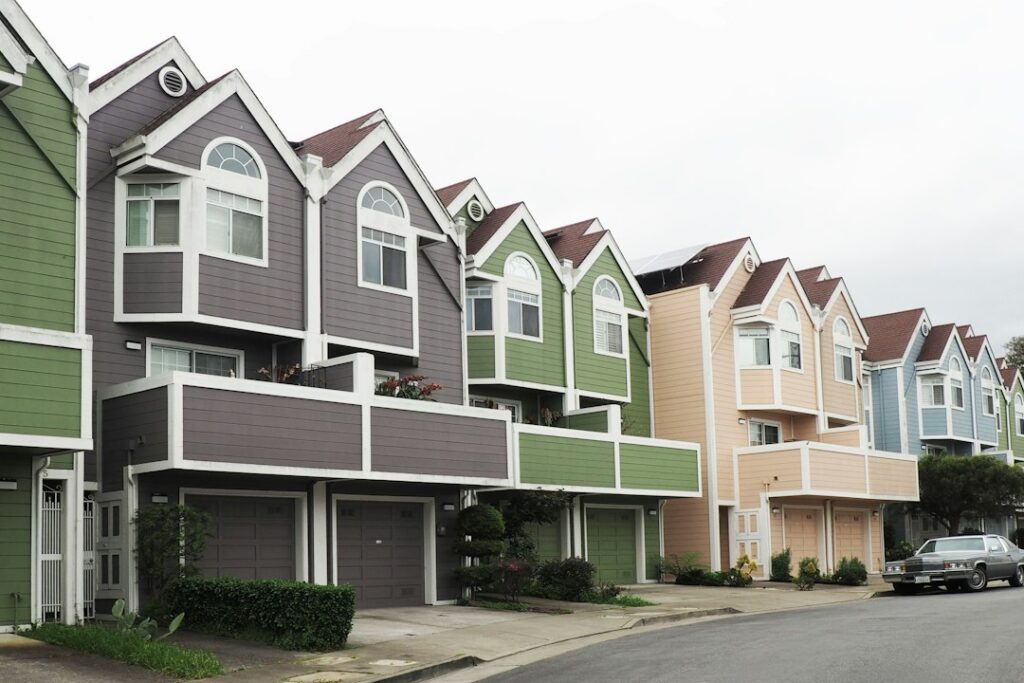
Methodology and corrections: Original cross-jurisdictional comparison based on California HCD and published county planning guidance checked October 17, 2026. This is not a measured ranking of all counties, real-estate or legal advice, or a guarantee of permission. Featured photograph is a general California housing illustration, not a verified manufactured-home installation.
USEFUL SERVICES
Useful services from our ecosystem
AFFILIATED RESOURCE
Travel smarter worldwide
OptionTripAI-powered trip planning for journeys in California and around the world.
Explore OptionTrip →AFFILIATED RESOURCE
Free tax & property tools
TaxesTimeFree preliminary tax and property tools, including the Property Tax Savings Report.
Explore TaxesTime →AFFILIATED RESOURCE
California document support
LegalDocSVCDocument preparation support for self-represented Californians. Not a law firm and not legal advice.
Explore LegalDocSVC →WORK WITH CALIFORNIA58
Have a story, project or partnership idea?
California58 welcomes news tips, interviews, video projects, community partnerships, advertising and other California-focused collaborations.
Work with California58 →
COMMUNITY
Comments
Join the California58 conversation. You must be signed in to comment.
Create a free California58 account or sign in with an available social provider.