
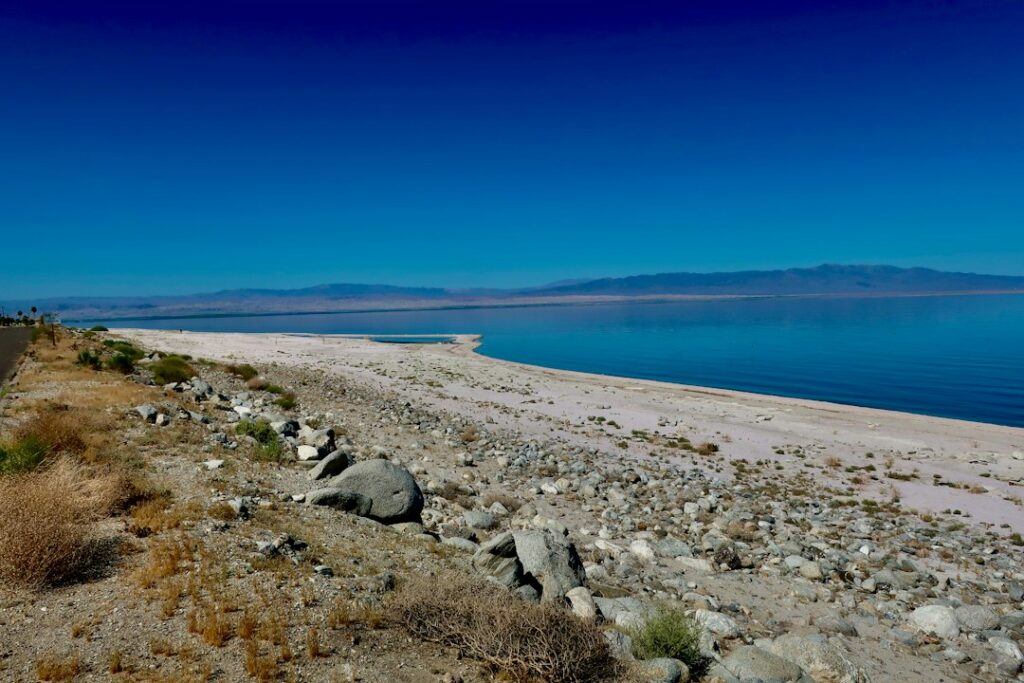
SALTON CITY, Imperial County — Residents on the western shore of the Salton Sea have a direct stake in California’s air-quality monitoring and dust-control plans as water levels decline and exposed lakebed expands.
A March 2026 state monitoring work plan lists a Salton City monitoring station, cataloged by the California Air Resources Board as site 13604 and operated by the Imperial Irrigation District. The work plan identifies measurements including fine particulate matter (PM2.5) and meteorological observations such as temperature, humidity and wind data.
Why the location matters
According to the California Department of Water Resources, declining Salton Sea water levels have increased concern about exposed lakebed, airborne particulates and loss of habitat. The Salton Sea Management Program combines habitat restoration, dust suppression and monitoring efforts. Air pollution conditions, however, can vary by time, location and pollutant.
A monitoring site listed in a plan does not establish that the air is safe or unsafe at a particular home on a specific day. Nor does its presence prove that all restoration projects are complete. Monitoring data, local alerts and project construction milestones are separate pieces of information.
What does the 2026 plan describe?
The state’s work plan describes a broader Salton Sea Monitoring Implementation Plan that addresses air pollution, surface water, biological conditions and public involvement. Air monitoring sites in the region track different combinations of PM10, PM2.5, hydrogen sulfide, ozone and meteorological conditions. The Salton City station’s listed measurements should not be confused with those at Bombay Beach, Niland or Mecca.
The document also describes opportunities for public meetings and involvement by a Community Engagement Committee. The committee connects tribal governments, local residents, community organizations and agencies with program managers.
How residents can follow projects and ask questions
- Read the state’s Salton Sea Management Program site for projects, reports and public notices.
- Visit the program’s Connect With Us page for community engagement and newsletter information.
- Review the State Water Board’s Salton Sea page for regulatory oversight and annual workshop documents.
- When evaluating an air-quality claim, check the monitoring location, pollutant, time range and agency publishing the data.
For residents of Salton City, the questions are practical: what does a monitor measure, which nearby projects are scheduled, what changes have actually been completed, and how can affected households submit evidence or concerns? Public documents are a starting point for holding agencies accountable.
Featured photograph: Don Stouder / Unsplash. A landscape illustration of the Salton Sea, not a current air-quality reading.
Sources: 2026 Salton Sea Monitoring Implementation Plan annual work plan, California Department of Water Resources and State Water Resources Control Board. This article does not report an unverified current pollution reading.
Support Salton City News
Choose how to support Salton City News:
Credit / Debit Card via StripeChoose an amount from $1. One-time support through the publisher's LINKERNO Stripe account.
Continue with PayPalZelle323-677-7643Open Zelle through your bank. Verify the recipient before sending.
Optional reader support. When possible, add “Salton City News” to the payment note. Contributions are not advertised as tax-deductible. Support does not influence editorial decisions.More from Salton City News
Explore more local reporting and community updates on the newspaper homepage.
Visit Salton City News →
COMMUNITY
Comments
Join the California58 conversation. You must be signed in to comment.
Create a free California58 account or sign in with an available social provider.