
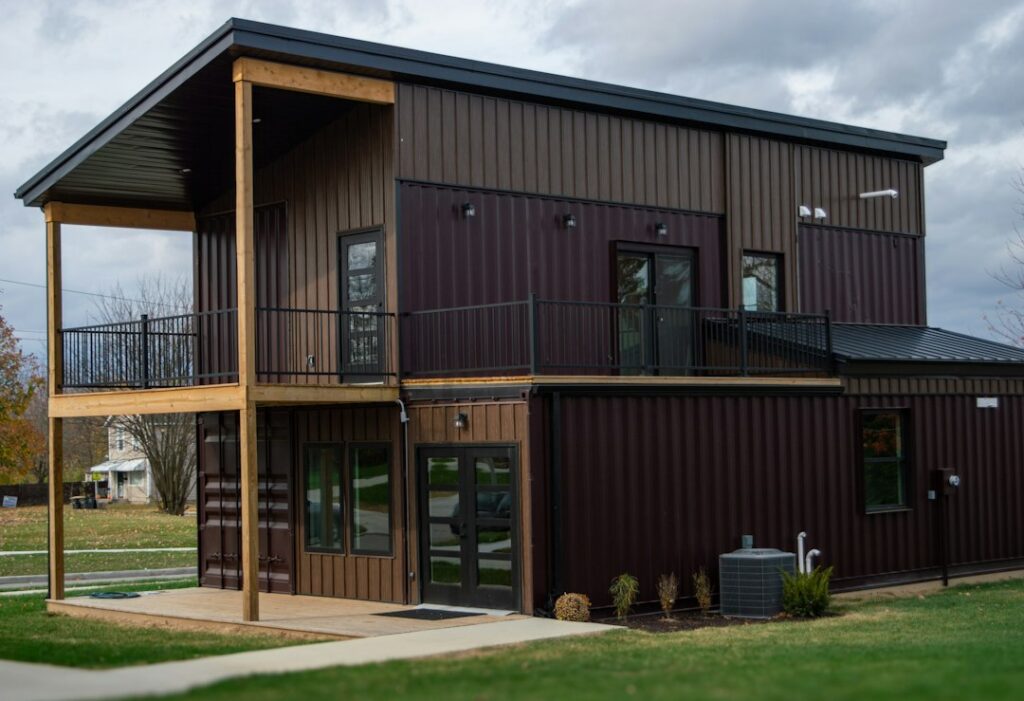
CALIFORNIA58 HOUSING & PERMITS INVESTIGATION | October 17, 2026. A used shipping container looks like an inexpensive shortcut to a house. It is already a steel structure, can arrive on a truck and appears sturdy enough to withstand extreme weather. But a cargo container is not automatically a legal dwelling. Once a homeowner cuts windows and doors, adds insulation, plumbing, wiring and a bedroom, the building must satisfy applicable land-use and construction rules. On some parcels, a container cannot be used as a residence at all.
Buying a container before the local government reviews the project can leave the owner with an expensive storage box rather than a permitted home. The sequence starts with the parcel, not the product catalog. See California58's 17 checks before buying vacant land and tiny-home classification guide.
1. Is a shipping container home legal in California?
There is no simple statewide yes-or-no for every property. California's 2025 Building Standards Code, effective January 1, 2026, governs construction along with local zoning and adopted requirements. The Building Standards Commission's 2025 Chapter 31 update references provisions for intermodal shipping containers in special construction and scope limitations in certain healthcare settings. That does not establish residential permission on a specific parcel. Building and zoning officials must review the proposed use and structure.
Tulare County provides a direct public answer: its Permit Center FAQ explains that shipping containers may be used or converted only when applicable building and zoning requirements are met, and turning one into habitable space generally requires a building permit and compliance with structural, energy, fire and safety standards. It recommends contacting the county before purchasing or modifying the unit.
2. Storage approval and residential approval are not interchangeable
A county might permit a cargo container as temporary construction storage or as an accessory use to an existing home. That is not proof that it will permit permanent sleeping rooms or kitchen facilities inside the same unit. As a practical example, a June 2026 Sacramento County project notice documents a minor use permit for a cargo container as an accessory use to an existing single-family home. It does not claim residential occupancy inside the container. Always ask separately about storage, accessory structures and residential conversions.
3. County zoning comes before engineering
First confirm that the APN is a legal parcel in the correct jurisdiction and that the proposed residential use is lawful. Check district zoning, density, setbacks, lot coverage, any conditional permits, design restrictions, flood risk and fire hazard classification. A cheap desert parcel may have a zone nominally associated with residences but lack roads, water or wastewater capacity to support a legal dwelling.
4. Cutting holes can change structural performance
Shipping containers are designed for cargo handling and transport, not automatically for long-term residential occupancy after large wall sections are removed. Window openings, doors, roof decks, staircases and removal of interior walls can change structural loads. A licensed design professional may need to analyze the actual unit, reinforcing, welds, connections and the foundation. Do not assume the container's original transport rating is adequate evidence of code-compliant residential construction.
5. Foundations, wind and earthquakes matter
Ask the building official what foundation, anchoring, uplift, lateral-force and geotechnical design is required for the site. California properties have varied seismic, wind, soil and slope conditions. Placing an unanchored box on blocks may not satisfy residential occupancy requirements. Delivery also needs lawful road access and a practical crane route.
6. Insulation and energy performance are not optional details
Metal walls conduct heat, and condensation can become a problem without properly designed insulation, ventilation and moisture control. Residential conversions must be evaluated against relevant thermal, energy, ventilation, room dimension, light and egress requirements. The California Energy Commission publishes solar and energy-code resources for newly constructed buildings; the applicable design requirements depend on the dwelling type and approved project.
7. A container does not fix the water or septic problem
For an undeveloped lot, the long-term budget is often dominated by the property improvements outside the unit. Check legal access, a dependable potable water supply, electricity, lawful wastewater disposal and fire protection. California58's guides explain private-well costs, septic permits and soil tests and electrical service extensions.
8. Could the container be an ADU?
An accessory dwelling unit (ADU) must independently satisfy state ADU requirements, local objective standards and applicable construction codes. Simply putting a kitchen in a container does not automatically classify it as a qualifying ADU. If the container will be prefabricated into a building off site, additional factory-built housing rules and certifications may be relevant. Confirm classification with the enforcing authority.
9. The missing line items in “cheap container home” advertising
Build a full estimate covering the container's purchase and documented condition, transport, crane, site access, grading, foundations, engineered reinforcement, corrosion repair, insulation, windows and doors, mechanical systems, solar/electricity, water, septic or sewer, code-compliant finishing, architectural plans, permits, inspections and contingency. Even when the shell is cheap, these expenses can make a fully permitted project far costlier than the advertisement suggests. Do not publish a statewide guaranteed price without a site-specific scope and bids.
10. Questions for your building department
- Is permanent residential occupation of a repurposed intermodal container permitted under this APN's zoning?
- Does the project follow the California Residential Code, California Building Code or a special factory-built housing approval path?
- Which engineered plans, structural calculations, foundation details and inspections are required?
- Can a container be used as an ADU, and are there special design standards?
- How are water, wastewater, fire access, energy compliance and electrical power reviewed?
- Are used containers subject to documentation or condition requirements?
- Must permits be issued before placement, cutting, welding or site grading?
The takeaway
Container houses are a possible construction concept—not a permit loophole. A legal home is the combination of lawful land use, an approved design, an approvable utility plan and completed inspections. Get the jurisdiction's answer before the purchase deposit becomes nonrefundable.
Official references
- California Building Standards Commission — 2025 Title 24
- CBSC — Chapter 31 Special Construction Changes
- Tulare County — Permit Center FAQs on container conversions
- Sacramento County — accessory container project notice (2026)
Editorial note: This is a statewide permit and planning guide, not an engineering certification or a representation that a particular county has approved a specific container-house plan.
Support California58
Choose how to support California58:
Credit / Debit Card via StripeChoose your contribution amount on the secure California58 Stripe checkout. One-time support for independent local journalism.
Continue with PayPal Continue with ZelleZelle payments go to Vitaly Ataev Troshin. Please verify the recipient in your bank before sending. Availability depends on your bank.
Optional reader support. Contributions are not advertised as tax-deductible. Support does not influence editorial decisions.ПОЛЕЗНЫЕ СЕРВИСЫ
Полезные сервисы нашей экосистемы
ПАРТНЁРСКИЙ СЕРВИС
Путешествуйте умнее по всему миру
OptionTripПланирование поездок с современными технологиями для путешествий по Калифорнии и миру.
Открыть OptionTrip →ПАРТНЁРСКИЙ СЕРВИС
Бесплатные налоговые и имущественные инструменты
TaxesTimeБесплатные предварительные налоговые и имущественные инструменты, включая Property Tax Savings Report.
Открыть TaxesTime →ПАРТНЁРСКИЙ СЕРВИС
Помощь с документами в Калифорнии
LegalDocSVCПоддержка в подготовке документов для жителей Калифорнии, представляющих себя самостоятельно. Не юридическая фирма и не юридическая консультация.
Открыть LegalDocSVC →СОТРУДНИЧЕСТВО С CALIFORNIA58
Есть новость, проект или идея для сотрудничества?
California58 открыт для новостных тем, интервью, видеопроектов, партнерств с сообществами, рекламы и другого сотрудничества, связанного с Калифорнией.
Сотрудничать с California58 →
СООБЩЕСТВО
Комментарии
Присоединяйтесь к обсуждению California58. Чтобы комментировать, необходимо войти в аккаунт.
Создайте бесплатный аккаунт California58 или войдите через доступную социальную сеть.