
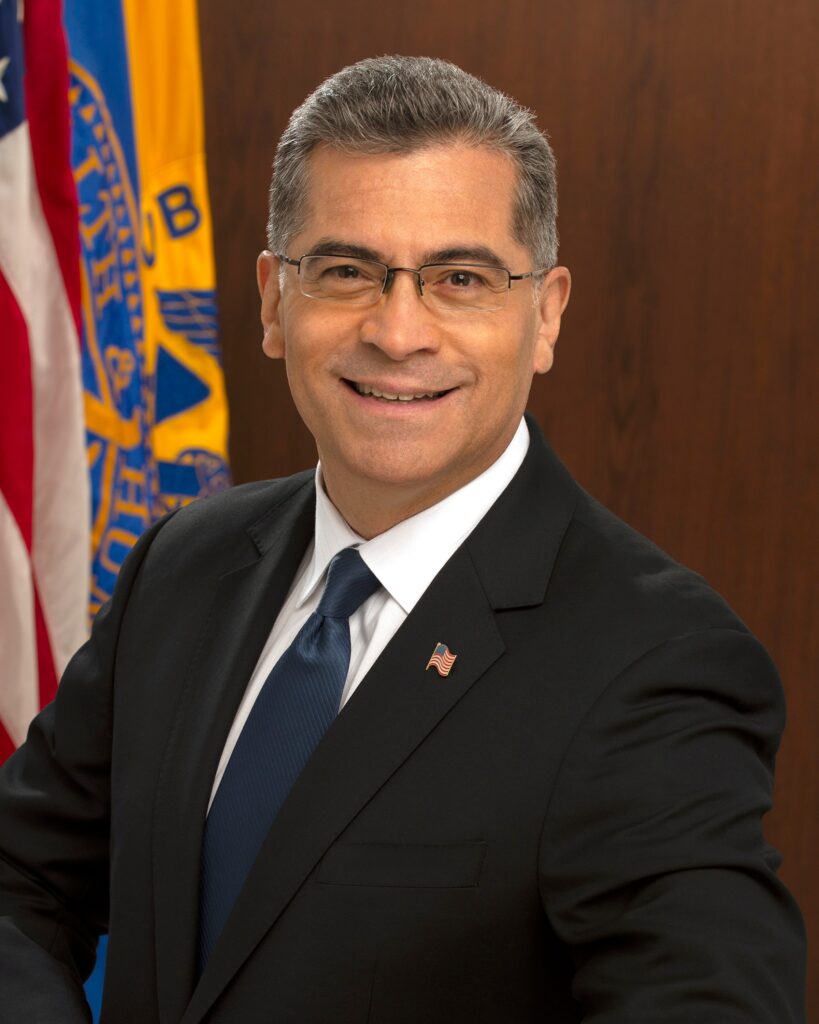
SACRAMENTO, California — November 19, 2026. California Governor-elect Xavier Becerra says he intends to pursue stronger laws governing high-risk artificial intelligence systems, including independent safety verification, broader incident reporting and new emergency powers to stop dangerous AI models. His statement follows a November 18 policy report commissioned by outgoing Gov. Gavin Newsom.
Becerra posted his plans on Facebook, saying he wants to strengthen California’s AI safety laws and build public trust. A longer version of his comments was independently reproduced in a November 19 statement from the California governor’s office. He argued that AI developers should not be the sole judges of their systems’ safety and indicated that he intends to work with lawmakers after taking office in January 2027.
Important distinction: Becerra has announced a legislative agenda. His remarks do not mean California has already enacted an across-the-board AI shutdown law, prohibited ChatGPT or authorized officials to switch off every AI application.
What did Becerra actually propose?
In his statement, the governor-elect supported four connected steps: enforceable safety standards for advanced AI developers; verification by outside experts rather than companies alone; comprehensive reporting when AI systems cause or pose critical safety problems; and genuine government authority to require a shutdown in an emergency. He described the existing state framework as a starting point, not the finished system.
These ideas build on Newsom’s November 18 announcement, which outlined mandatory independent oversight, baseline standards and a power to intervene when a dangerous AI model is not adequately controlled. The report also discusses monitoring AI used to develop more powerful AI, sometimes described as recursive self-improvement.
What would an emergency shutdown mean?
The proposal concerns dangerous frontier AI systems and scenarios involving serious risks, not routine questions that residents type into chatbots. Under the proposed framework, a state agency could be empowered to order action in an emergency where a developer fails to contain a model considered an immediate danger. The details would depend on the wording of any future law: who makes the risk determination, what evidence is required, which companies and models qualify, how emergency orders are reviewed and what appeal rights apply.
It would therefore be misleading to describe this announcement as a universal, already-available government “kill switch.” A recommended power is not the same as an enacted and operational enforcement process.
How is California law different today?
California already passed SB 53, the Transparency in Frontier Artificial Intelligence Act, signed in September 2025. It requires certain large frontier developers to publish safety frameworks, creates mechanisms for reporting critical safety incidents and protects qualifying whistleblowers. Under the existing framework, the standard reporting period for certain critical incidents is 15 days; incidents posing imminent risk of death or serious physical injury are subject to faster reporting obligations. The California Attorney General’s SB 53 information page describes its current transparency and safety requirements.
The new expert recommendations would go further. Among the ideas reported by CalMatters is a 48-hour deadline for many critical AI safety reports, compared with the current general 15-day window. Newsom’s office also says SB 813 and AB 1405, enacted in 2026, establish an emerging framework for independent AI evaluations and an auditor registry. Those measures and the proposed emergency enforcement power should not be conflated.
California58 previously explained the Newsom administration’s original November 18 policy proposals. Becerra’s latest statement is significant because it indicates that the incoming governor plans to carry the work into his administration rather than leave the report only as advice to Newsom.
What could this mean for residents and California technology companies?
For residents, the proposed rules could make it easier for regulators to obtain independent evidence about the safety of particularly powerful AI systems, receive prompt information about serious failures and intervene when a defined emergency occurs. They would not, on their own, guarantee protection against every form of fraud, deepfake, discrimination, inaccurate chatbot output or loss of employment. Different problems may require different laws and enforcement agencies.
For developers, the unanswered questions are practical as well as legal: who pays for audits, how independent auditors are selected, what confidential technical information regulators can inspect, what counts as an emergency and how smaller companies would be treated. Supporters of stricter oversight emphasize catastrophic-risk prevention and accountability; critics of broad government intervention may raise concerns about costs, uncertain standards, due process, security and potential effects on innovation. Those issues remain for legislators to debate.
What happens next?
The California governor’s office describes Becerra as governor-elect, and the article’s results link reflects the Associated Press projection. The official statewide canvass is still underway; the California Secretary of State is scheduled to certify the election on December 11, 2026. Becerra is not yet the sitting governor. The Legislature would need to introduce, debate and pass specific provisions, and the state would need to design any new regulatory and enforcement system. As of November 19, the statements describe intentions and recommendations, not a newly enacted Becerra AI shutdown statute.
Residents and businesses should watch the text of any bills, the scope of covered models, reporting deadlines, rules for independent audits and safeguards governing emergency orders rather than assuming a proposal has already changed their rights.
Primary sources and editorial note
- California Governor’s Office — Becerra statement, November 19, 2026
- California Governor’s Office — AI safety recommendations, November 18, 2026
- California Department of Justice — SB 53 oversight and reporting
- KQED / Associated Press — November 2026 governor election results
Reporting note: California58 reviewed a screenshot of Becerra’s Facebook statement and independently corroborated his remarks with the governor’s office. The Facebook screenshot was not used to infer any legal change or specific implementation date. Official federal-government portrait of Xavier Becerra, if displayed, is archival.
Support California58
Choose how to support California58:
Credit / Debit Card via StripeChoose your contribution amount on the secure California58 Stripe checkout. One-time support for independent local journalism.
Continue with PayPal Continue with ZelleZelle payments go to Vitaly Ataev Troshin. Please verify the recipient in your bank before sending. Availability depends on your bank.
Optional reader support. Contributions are not advertised as tax-deductible. Support does not influence editorial decisions.USEFUL SERVICES
Useful services from our ecosystem
AFFILIATED RESOURCE
Travel smarter worldwide
OptionTripAI-powered trip planning for journeys in California and around the world.
Explore OptionTrip →AFFILIATED RESOURCE
Free tax & property tools
TaxesTimeFree preliminary tax and property tools, including the Property Tax Savings Report.
Explore TaxesTime →AFFILIATED RESOURCE
California document support
LegalDocSVCDocument preparation support for self-represented Californians. Not a law firm and not legal advice.
Explore LegalDocSVC →WORK WITH CALIFORNIA58
Have a story, project or partnership idea?
California58 welcomes news tips, interviews, video projects, community partnerships, advertising and other California-focused collaborations.
Work with California58 →
COMMUNITY
Comments
Join the California58 conversation. You must be signed in to comment.
Create a free California58 account or sign in with an available social provider.