
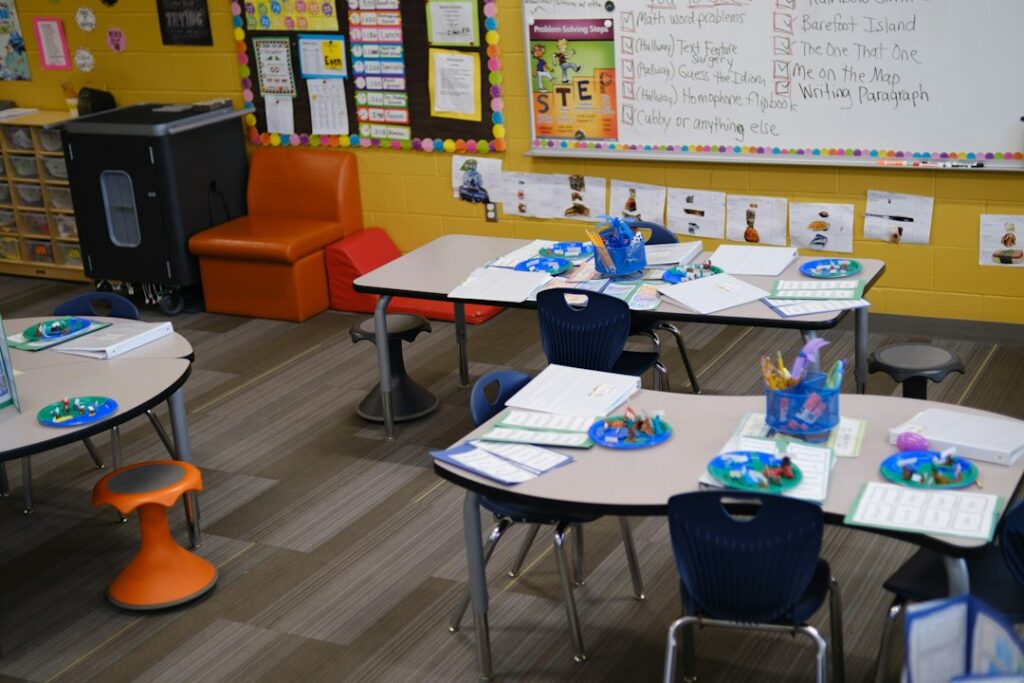
Featured photograph: illustrative classroom scene by Far Chinberdiev / Unsplash. This photograph is not of a particular California school or grant recipient.
CALIFORNIA58 | EDUCATION & PUBLIC SPENDING | October 18, 2026. California education authorities have announced a $3,772,005,125 first apportionment of the 2026–27 Student Support and Professional Development Discretionary Block Grant. The California Department of Education’s October 16 letter identifies school districts, charter schools, county offices of education and state special schools as eligible recipients.
This is money allocated to local educational agencies, not personal checks for families or students. Parents and school employees can use the allocation records to ask what programs their district plans to fund and how those decisions will be reported.
Why $3.77 billion is not the complete grant total
The Department of Education states that the payments described in its October 16 letter represent 75% of each local educational agency’s allocation. The allocation formula uses average daily attendance reported for transitional kindergarten through grade 12 from the 2025–26 second principal apportionment. The statewide per-unit funding rate is approximately $935.17.
Therefore the $3.772 billion amount should be described as the first apportionment, not falsely as the entire maximum grant program, a new single-school award, or an amount available to every California family. The letter says payment warrants will be mailed approximately three weeks after its date.
What can districts use the funding for?
The statute and state guidance identify a broad set of permitted purposes. Examples include:
- Professional development for teachers in literacy, English-language development, mathematics and appropriate age-level instruction.
- Teacher recruitment and retention and other staffing-related support.
- Career education pathways and dual-enrollment opportunities.
- Community schools and neighborhood partnership programs.
- Deferred maintenance of school buildings and facilities.
- Managing rising operating costs when expenditures meet applicable program requirements.
These are allowable categories, not claims that every county has already chosen to spend the money in all of them. Local budgets, school board plans, public-hearing records and future spending reports will determine what a particular district does.
Two important accountability rules
Under Education Code section 44475, districts or charter schools facing declining enrollment or projected declines must hold a public hearing in connection with the Local Control and Accountability Plan addressing impacts and options. Topics can include keeping students, courses, program offerings, class sizes, facilities, possible campus consolidation and local revenue alternatives.
The state also says recipients must not charge their employees fees for professional services, including teacher induction and professional development, during the grant period. Schools must submit final expenditures to the state by September 30, 2032, unless earlier special rules apply to entities closing before then.
How to see what your school district received
Parents, teachers and school board members should consult the CDE funding results and apportionment schedule, then identify their own district or school system by name. The program overview and official frequently asked questions explain rules and reporting. A statewide allocation number should not be assigned to one county without checking its individual entry.
What changes for residents? The funding may support teacher retention, classroom instruction, facilities and programs, but its local impact depends on school-board decisions and measurable spending. A useful follow-up for each local newspaper is to investigate its district’s specific allocation, compare plans with student needs, and revisit the outcome when records become available.
Primary source: California Department of Education first-apportionment letter, October 16, 2026. Reporting distinguishes allocated first-payment funds from final local expenditures and quotes the state formula rather than inventing county totals.
USEFUL SERVICES
Useful services from our ecosystem
AFFILIATED RESOURCE
Travel smarter worldwide
OptionTripAI-powered trip planning for journeys in California and around the world.
Explore OptionTrip →AFFILIATED RESOURCE
Free tax & property tools
TaxesTimeFree preliminary tax and property tools, including the Property Tax Savings Report.
Explore TaxesTime →AFFILIATED RESOURCE
California document support
LegalDocSVCDocument preparation support for self-represented Californians. Not a law firm and not legal advice.
Explore LegalDocSVC →WORK WITH CALIFORNIA58
Have a story, project or partnership idea?
California58 welcomes news tips, interviews, video projects, community partnerships, advertising and other California-focused collaborations.
Work with California58 →
COMMUNITY
Comments
Join the California58 conversation. You must be signed in to comment.
Create a free California58 account or sign in with an available social provider.