
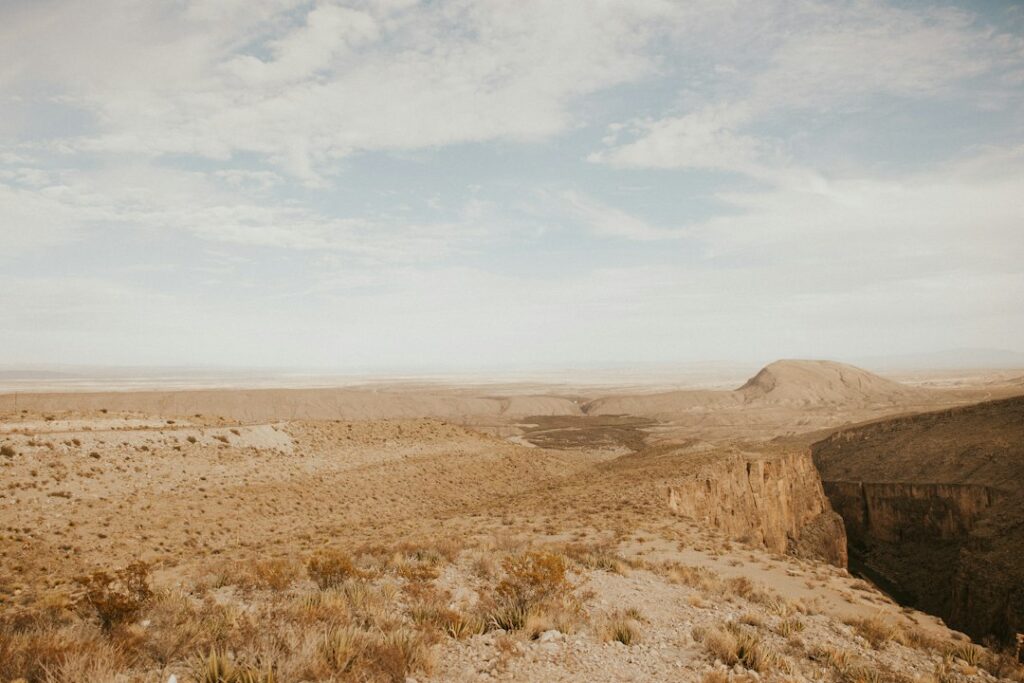
Featured photo: desert landscape and building by Jorge Flores / Unsplash. Illustrative only; not Kelly Silver Mine, Red Mountain Wash or a documented contaminated property.
RED MOUNTAIN NEWS | PUBLIC RECORDS & ENVIRONMENT | OCTOBER 19, 2026. The history of mining around Red Mountain is not only a story about the past. Federal public records document a long-running investigation and cleanup process associated with the Kelly Silver Mine and Red Mountain Wash, including the presence of arsenic in certain mine-related materials. As California58 launches Red Mountain News, we are beginning a continuing public-records series about how this program affects the community—and what has not yet been established.
The Rand Historic Mining Complex includes three areas
The Bureau of Land Management (BLM) identifies the Rand Historic Mining Complex as a federal abandoned-mine cleanup project encompassing three areas: Kelly Silver Mine (OU1) in Red Mountain, Yellow Aster Mine (OU2) near Randsburg, and Johannesburg-area historic mines (OU3). These areas span San Bernardino and Kern counties. The BLM Ridgecrest Field Office is the lead office for the federally managed portions of the cleanup.
What the federal documents describe
BLM’s publicly indexed January 6, 2025 Action Memorandum for Red Mountain Wash describes arsenic found above relevant screening levels in areas associated with historic mine waste. It identifies waste-rock and tailings piles and the movement of mine material through washes by wind or water as concerns. The agency also prepared a restoration plan addressing federal land affected by historical mining. These are site-specific descriptions of mine and wash material—not measurements of the tap water, yards or indoor air of every resident.
The agency’s NEPA project record identifies the Red Mountain Wash component of Kelly Silver Mine OU1 and notes historic tailings, waste-rock piles and former processing areas. The Red Mountain Wash lies near parts of the settlement, which makes accurate public mapping and clear explanations particularly important.
What is the project’s 2026 status?
As reviewed on October 19, 2026, the BLM’s public project page continues to list the Rand Historic Mine Complex project as “In Progress – Public Review and Comment Period.” That project-level label is not proof that no fieldwork has occurred, and it does not independently establish which cleanup components have been completed. We found no definitive current project-level final completion certification in the reviewed page. Red Mountain News is therefore not reporting that the entire site has been remediated.
Does federal concern about arsenic mean all local homes are contaminated?
No such conclusion follows from the reviewed documents. Mine-tailings measurements, residential soil sampling, groundwater tests and household tap-water results are different forms of evidence. A federal site investigation establishes concerns in the locations studied; it does not establish the exposure of a particular resident without appropriate site-specific information. Residents should not rely on visual appearance or assumptions about the entire community to judge health risk.
Questions residents deserve answers to
- Which mine and wash areas have been sampled, and what maps are publicly available?
- Where has contaminated material been consolidated or removed, and what measures were used to prevent dust or stormwater movement?
- Which cleanup stages were completed by October 2026, and what remains planned?
- Were residential properties sampled under this program? If so, what procedures and notification policies applied?
- How can residents access sampling results, meeting minutes, the administrative record and agency contacts?
- What is the process for reporting suspected mine-tailings disturbance or accessing relevant environmental health guidance?
How to follow the cleanup
Start with the BLM Rand Historic Mining Complex overview and the federal project register. The responsible BLM Ridgecrest Field Office lists (760) 384-5400 and BLM_CA_Web_RI@blm.gov. Residents can ask for the latest project status and accessible copies of relevant reports. Some older document links may no longer open reliably; the agency should be asked for working records rather than assuming an unavailable link means a document no longer exists.
What residents should do now
Avoid disturbing potentially contaminated historical mine waste or entering abandoned workings. If a household uses a private well, use a state-certified laboratory to assess water quality instead of inferring results from nearby mine data. Anyone concerned about possible exposure should consult qualified environmental or healthcare professionals based on the actual circumstances.
See our local guides to private-well testing and public land recreation restrictions.
Evidence disclosure: This is an original analysis of BLM project information, the BLM project register and archived federal action/restoration documents. Historical documents are not presented as newly issued in 2026. Red Mountain News has not conducted environmental sampling or independently determined residential health impacts.
Support Red Mountain News
Choose how to support Red Mountain News:
Credit / Debit Card via StripeChoose an amount from $1. One-time support through the publisher's LINKERNO Stripe account.
Continue with PayPalZelle323-677-7643Open Zelle through your bank. Verify the recipient before sending.
Optional reader support. When possible, add “Red Mountain News” to the payment note. Contributions are not advertised as tax-deductible. Support does not influence editorial decisions.More from Red Mountain News
- Red Mountain News: 42 Test Drill Holes Proposed at St. Elmo Mine — What County Records Actually Approve →
- Red Mountain News: Private Well Permits and Water Tests in the Mining District — 2026 Guide →
- Red Mountain News: How to Check Land Zoning, Legal Lots and Building Permits in 2026 →
- Red Mountain News: San Bernardino County’s 2026 Emergency Campaign Puts Rural Desert Alerts in Focus →
- Red Mountain News: 2026 BLM Off-Road Rules Bring New Route Closures and a Free Rand Mountains Permit →
COMMUNITY
Comments
Join the California58 conversation. You must be signed in to comment.
Create a free California58 account or sign in with an available social provider.