
CALIFORNIA — November 29, 2026, early morning Pacific time. The offshore earthquake sequence that began Saturday near Manhattan Beach continued overnight. In the USGS magnitude-2.5-and-above feed generated at 1:27 a.m. Sunday, the latest listed South Bay event was a preliminary M2.99 (displayed as 3.0), about 5 km southwest of Manhattan Beach at 12:42 a.m. The last event strictly above magnitude 3 in the same coastal cluster shown in that snapshot was a preliminary M3.33 west-southwest of Hermosa Beach at 9:07 p.m. Saturday. The catalog is continuously revised.
Saturday’s mainshock and selected subsequent earthquakes
The reviewed USGS mainshock was M5.0 at 9:30 a.m. November 28, about 5 km southwest of Manhattan Beach, 12.8 km deep in the later catalog snapshot. Early estimates differed; the reviewed origin is the basis of this report. Selected catalog entries, in Pacific Standard Time:
| Local time | Magnitude | USGS location |
|---|---|---|
| Nov. 28, 9:30 a.m. | 5.0 | Manhattan Beach offshore |
| 10:01 a.m. | 3.68 | SW of Manhattan Beach |
| 10:30 a.m. | 3.70 | WSW of Hermosa Beach |
| 11:41 a.m. | 4.5 | WSW of Manhattan Beach |
| 2:08 p.m. | 3.97 | WSW of Manhattan Beach |
| 2:27 p.m. | 3.93 | WSW of Manhattan Beach |
| 8:08 p.m. | 3.95 | WSW of Hermosa Beach |
| 9:07 p.m. | 3.33* | WSW of Hermosa Beach |
| Nov. 29, 12:42 a.m. | 2.99* | SW of Manhattan Beach |
*Automatic preliminary solutions. This is a selected chronology, not a complete count of the sequence. USGS live feed.
What happened on November 28
The Associated Press reported that Los Angeles fire crews checked infrastructure across 106 station districts before resuming normal operations; no immediate injuries or major damage were found by that city survey. That does not establish the absence of damage elsewhere or later. The USGS mainshock ShakeMap estimates maximum intensity V (moderate), distinct from its magnitude. Check official local notices for updated damage assessments and travel information.
How it compares with other California earthquakes in 2026
On November 19 at 10:49 p.m. PST, a reviewed M5.0 near Pinnacles originated at 6.4 km depth. On November 20 at 3:25 a.m., the reviewed Commerce earthquake was M3.9, 15.5 km deep; earlier M4.2 estimates were preliminary. The annual catalog comparison below gives a wider perspective. Identical magnitudes do not mean identical shaking or damage: depth, distance, geology and building characteristics matter. No evidence in these catalog entries establishes that these separate sequences triggered one another.
2026 year-to-date catalog: 261 California-labeled earthquakes above M3.0
California58 downloaded the USGS regional event catalog for January 1 through November 29 at 1:27 a.m. Pacific time. Filtering to earthquake records labeled California (including offshore locations) with catalog magnitude strictly greater than 3.0 returned 261 events associated with 94 normalized place labels. The search rectangle includes 31.5–42.2°N and 127–114°W; Nevada and Mexico labels are excluded. This is a reproducible catalog snapshot, not a legal-boundary count or a count of cities with measured shaking.
| Local date | Location | Catalog magnitude |
|---|---|---|
| June 24 | North of Redwood Valley | 5.59 |
| June 3 | Offshore west of Petrolia | 5.10 |
| November 28 | Offshore Manhattan Beach | 5.01 |
| November 19 | Northwest of Pinnacles | 4.98 |
| November 4 | Far offshore west of Petrolia | 4.96 |
| January 19 | North-northeast of Indio | 4.92 |
Within this defined dataset, the November 28 South Bay mainshock is the third-largest California-labeled entry in 2026 to date. The catalog records 11 M>3 events from that offshore cluster on November 28 PST (including the mainshock), while the early November 29 M2.99 entry is below the strict threshold. The numbers may change as origins are revised.
Why California shakes and what aftershocks mean
California straddles an active plate boundary, with numerous faults accommodating crustal motion. Earthquakes occur when accumulated stress is released through fault slip. Aftershocks are additional earthquakes near a mainshock as stress redistributes. The specific fault responsible should not be assigned solely from an epicenter map. A cluster of earthquakes is not proof that a larger event is imminent. USGS forecasts probabilities, not precise earthquake times.
The USGS forecast updated November 28 at 23:40 UTC estimated a 40% chance of at least one M4+ and a 5% chance of at least one M5+ aftershock during the following week. This was a dated forecast, not a guarantee; consult the latest version.
What residents should do
During shaking, Drop, Cover and Hold On. Check official emergency alerts, avoid damaged structures and report emergencies to 911. Coastal residents should check tsunami.gov for official notices; a catalog tsunami flag is not itself a tsunami warning. Learn about ShakeAlert and report felt shaking through the USGS event page. The USGS earthquake catalog allows residents to explore their area’s 2026 earthquake history.
Sources: USGS/CISN reviewed earthquake origins and live catalog, USGS aftershock forecast, Associated Press reporting. Data snapshot: November 29, 1:27 a.m. PST. The regional catalog count below uses a defined geographic and naming filter; it is not an exact count of events inside the legal state boundary.
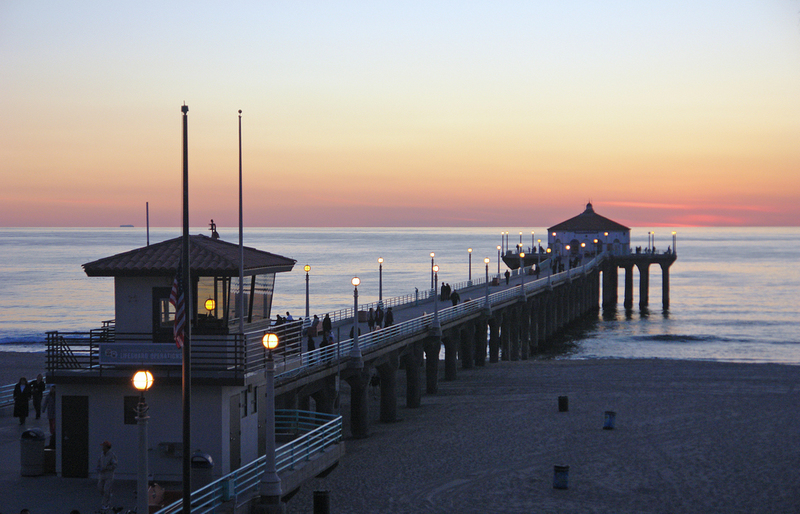
Cover: archival Manhattan Beach Pier photograph, Evanthomas1 / Wikimedia Commons, public domain; not earthquake damage.

Find your local 2026 earthquake report
California58 has published 68 local newspaper reports and 18 regional county reports covering the remaining 26 geographic labels in this catalog. Each includes linked USGS records, magnitude and depth, and comparison with the November 28 mainshock. Select the relevant reference area; a USGS label is not a measurement of shaking in that town.
Local newspaper reports
- Alamo
- Angwin
- Anza
- Avalon
- Banning
- Barstow
- Blackhawk
- Boonville
- Borrego Springs
- Boulder Creek
- Brawley
- Brooktrails
- Cabazon
- Cloverdale
- Colusa
- Commerce
- Compton
- Corona
- Covelo
- Crescent City
- Dana Point
- Desert Hot Springs
- Ferndale
- Fillmore
- Frazier Park
- Furnace Creek
- Gilroy
- Gustine
- Hermosa Beach
- Holtville
- Huron
- Hydesville
- Imperial
- Indio
- Johannesburg
- Kernville
- Larkfield-Wikiup
- Laytonville
- Likely
- Loma Linda
- Manhattan Beach
- Maricopa
- Muscoy
- Newport Beach
- Niland
- Ocotillo
- Ontario
- Piru
- Rancho Palos Verdes
- Redlands
- Redway
- Ridgecrest
- Salton City
- San Leandro
- San Lucas
- San Ramon
- Searles Valley
- Signal Hill
- South Lake Tahoe
- Tecopa
- Tres Pinos
- Trinidad
- Truckee
- Warner Springs
- Westmorland
- Willits
- Willows
- Wofford Heights
Additional county coverage
California58 — Your Town. Your News. Your Community.
Explore all 94 local and regional earthquake reports
California58 has published a separate catalog review for every normalized California reference label in this snapshot. These are not 94 independently verified municipal epicenters: offshore and rural reference locations are included. Where no standalone local edition was confirmed, the report is assigned to an appropriate county or nearby existing edition.
- Alamo
- Alder Springs (county coverage)
- Alum Rock (county coverage)
- Angwin
- Anza
- Avalon
- Banning
- Barstow
- Bayview (county coverage)
- Blackhawk
- Boonville
- Borrego Springs
- Boulder Creek
- Brawley
- Brooktrails
- Cabazon
- Cloverdale
- Cobb (county coverage)
- Colusa
- Commerce
- Compton
- Corona
- Coso Junction (county coverage)
- Covelo
- Crescent City
- Dana Point
- Deep Springs (county coverage)
- Desert Hot Springs
- Ferndale
- Fillmore
- Frazier Park
- Furnace Creek
- Gilroy
- Grapevine (county coverage)
- Gustine
- Hermosa Beach
- Holtville
- Huron
- Hydesville
- Imperial
- Indio
- Johannesburg
- Johnsville (county coverage)
- Kernville
- Kettleman City (county coverage)
- Lake Davis (county coverage)
- Lake Pillsbury (county coverage)
- Larkfield-Wikiup
- Laytonville
- Likely
- Loma Linda
- Ludlow (county coverage)
- Manhattan Beach
- Maricopa
- Muscoy
- Newport Beach
- Niland
- North Shore (county coverage)
- Ocotillo
- Ocotillo Wells (county coverage)
- Ontario
- Petrolia (county coverage)
- Pinnacles
- Piru
- Prattville (county coverage)
- Rancho Palos Verdes
- Redlands
- Redway
- Redwood Valley (county coverage)
- Ridgecrest
- Ridgemark
- Salton City
- San Clemente Island (county coverage)
- San Leandro
- San Lucas
- San Pedro
- San Ramon
- Searles Valley
- Signal Hill
- South Lake Tahoe
- Tecopa
- The Geysers (county coverage)
- Toms Place (county coverage)
- Tres Pinos
- Trinidad
- Truckee
- Upper Lake (county coverage)
- Viola (county coverage)
- Warner Springs
- Westley (county coverage)
- Westmorland
- Willits
- Willows
- Wofford Heights
Support California58
Choose how to support California58:
Credit / Debit Card via StripeChoose your contribution amount on the secure California58 Stripe checkout. One-time support for independent local journalism.
Continue with PayPal Continue with ZelleZelle payments go to Vitaly Ataev Troshin. Please verify the recipient in your bank before sending. Availability depends on your bank.
Optional reader support. Contributions are not advertised as tax-deductible. Support does not influence editorial decisions.USEFUL SERVICES
Useful services from our ecosystem
AFFILIATED RESOURCE
Travel smarter worldwide
OptionTripAI-powered trip planning for journeys in California and around the world.
Explore OptionTrip →AFFILIATED RESOURCE
Free tax & property tools
TaxesTimeFree preliminary tax and property tools, including the Property Tax Savings Report.
Explore TaxesTime →AFFILIATED RESOURCE
California document support
LegalDocSVCDocument preparation support for self-represented Californians. Not a law firm and not legal advice.
Explore LegalDocSVC →WORK WITH CALIFORNIA58
Have a story, project or partnership idea?
California58 welcomes news tips, interviews, video projects, community partnerships, advertising and other California-focused collaborations.
Work with California58 →
COMMUNITY
Comments
Join the California58 conversation. You must be signed in to comment.
Create a free California58 account or sign in with an available social provider.