
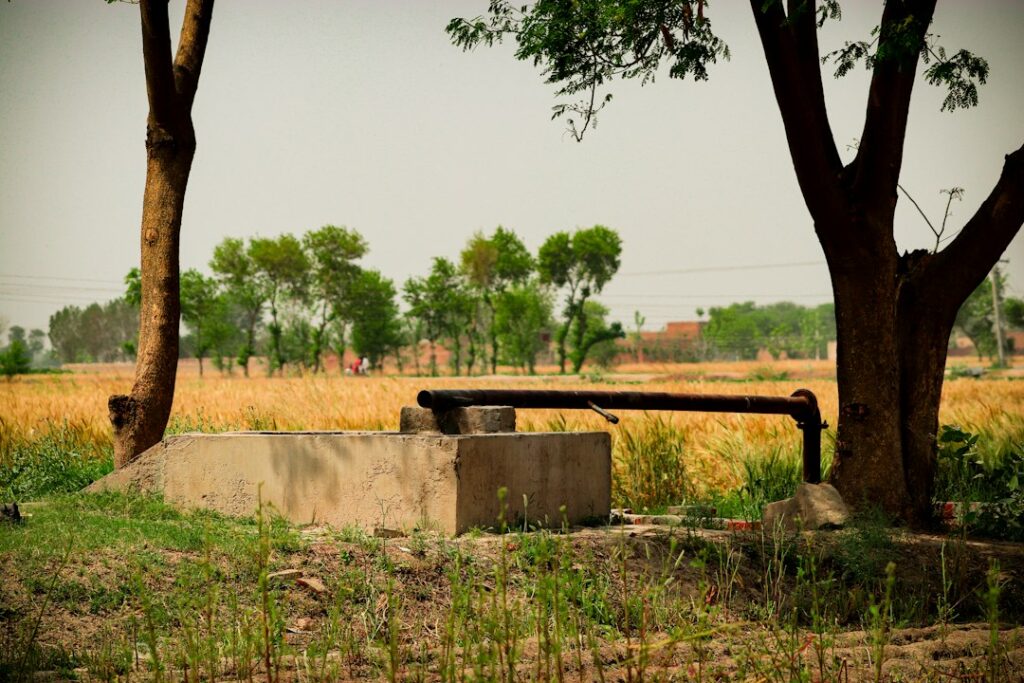
Featured photo: rural water pump by Mirza Zubair / Unsplash. Illustrative only; not a verified California well or DWR completion report.
CALIFORNIA58 | LAND & WATER | OCTOBER 18, 2026. Before buying a remote California parcel or paying a driller, a landowner can review records of wells already drilled nearby. The California Department of Water Resources (DWR) Well Completion Report program provides a statewide map and access to reports submitted by drilling contractors. These records may show the location, drilling date, well depth, subsurface geology, construction details and reported yield.
What a well completion report can tell you
Historical well logs can reveal whether nearby wells are shallow or deep and what formations drillers encountered. They are a research tool, not a guarantee of water availability, potability or drilling cost. A well a few hundred feet away may encounter different fractures, aquifers, depths or groundwater levels. Older yield figures may not reflect present drought conditions or pumping impacts.
How to find records
- Open DWR’s Well Completion Reports page and launch the WCR Map Application.
- Search by property address or location, then examine nearby records and the reported completion dates.
- If a report cannot be located, use DWR’s request form and the appropriate regional office. The department notes that some requests may involve fees.
- Compare the logs with the California Groundwater Live dashboard and discuss site-specific conditions with a qualified licensed well professional.
- Ask the local well-permitting agency about setbacks, permit requirements and groundwater rules before ordering drilling.
Who files the completion report?
California Water Code section 13751 generally requires a person constructing, altering or destroying a covered well to file a completion report with DWR within 60 days after the work is completed. DWR’s online submission system is designed for qualified drillers. Filing a report is not the same as receiving permission to drill: local permitting rules still apply.
What about water quality?
Depth and yield do not establish that water is safe to drink. Well owners should plan appropriate testing for bacteria and local chemical concerns through qualified laboratories and consult the county environmental health authority. In some locations, treatment or an alternative source may be needed. Neither a nearby well log nor a seller’s statement substitutes for current testing on the actual supply.
Costs require parcel-specific quotes
Drilling depth, casing, pump size, access, power, geology, treatment and failed attempts can change costs substantially. Do not extrapolate a precise dollar price from a map point. Read California58’s separate well-cost and permit guide for a broader cost checklist.
Primary sources: DWR Well Completion Reports, DWR well standards and resources, and California Groundwater Live. This is a statewide public-records explainer, not a guarantee that any particular lot can support a domestic well.
USEFUL SERVICES
Useful services from our ecosystem
AFFILIATED RESOURCE
Travel smarter worldwide
OptionTripAI-powered trip planning for journeys in California and around the world.
Explore OptionTrip →AFFILIATED RESOURCE
Free tax & property tools
TaxesTimeFree preliminary tax and property tools, including the Property Tax Savings Report.
Explore TaxesTime →AFFILIATED RESOURCE
California document support
LegalDocSVCDocument preparation support for self-represented Californians. Not a law firm and not legal advice.
Explore LegalDocSVC →WORK WITH CALIFORNIA58
Have a story, project or partnership idea?
California58 welcomes news tips, interviews, video projects, community partnerships, advertising and other California-focused collaborations.
Work with California58 →
COMMUNITY
Comments
Join the California58 conversation. You must be signed in to comment.
Create a free California58 account or sign in with an available social provider.